
Material Considered: Agricultural Fibreboard
Inspiration, News, Stories
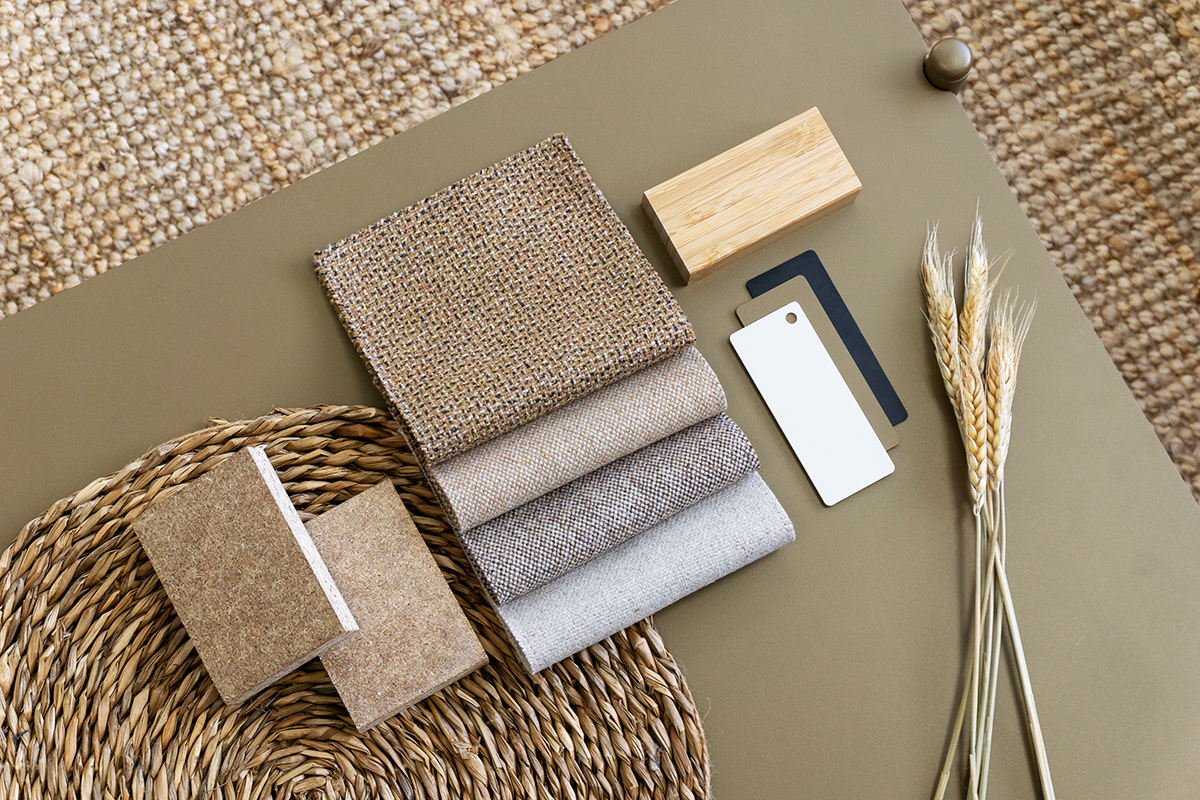
Agricultural fibreboard (AFB) is made from the by-products of farming: straw, reeds and other crop residues that are renewed each season. Rather than growing and harvesting new raw material, it makes use of what would otherwise be leftover – at best returned to the soil, at worst burned.
The resulting product is a structural board material that performs in a similar way to more conventional timber-based composites, but that begins from a more resource-efficient starting point.
With the raw material already existing as a by-product, fewer steps and processes are required to bring it into use – there is no need for felling, and less preparation is required before manufacture. AFB also uses a high-performance MDI (urethane based) binding resin, with no added formaldehyde, which achieves an overall resin content of 3%. This is a significant contrast to the 15-25% urea formaldehyde (UF) resin content found in typical bonded particleboards. This leads to boards that are 100% biodegradable, 100% formaldehyde-free, E0 (ultra low emission), and 100% recyclable to equal product.
Like all plant-based materials, agricultural residues absorb carbon as they grow. When used in board form, that carbon is retained within the material. In the case of AFB, this can result in more carbon being stored than is emitted during its production, so the starting point of the material is carbon negative. The final carbon score depends on transport and other factors, but it offers an improved starting point versus most conventional board materials.
When combined with legible, disassembly focused product design, it can be separated out and supports reupholstery, repair and re-use. In the scenario that the panel reaches the end of its life, the composition of the board allows for recycling and biodegradation. It’s part of a wider approach that includes our take-back scheme, where products can be returned for refurbishment, reuse or responsible deconstruction.
Since encountering AFB, we have worked continuously to introduce it into existing designs and prioritise its use where possible in new products. The complex reality of materials is rarely about panaceas, but about making more considered choices. We weigh up the qualities, assess the impact, and design with both the life and death of a product in mind. AFB is one of several materials we have selected to support design principles that prioritise longevity, repairability and end of life.
AFB can already be found in our Monsal banquette, Artus panels and booths, and the Otto, Sedir, Reece, and Quinn sofa collections.