
The Nook, Glasgow
Case Studies, Stories
Located in Glasgow’s Merchant City, The Nook is the first in a new network of walk-in mental health support hubs developed by Scottish Action for Mental Health (SAMH). Designed to remove the friction and hesitations associated with traditional services, it offers open access to support – no appointments, referrals or waiting lists – within a setting that prioritises dignity, ease and connection.
Opened in October 2025, the project establishes a model for future Nooks across Scotland, which will include Aberdeen, Edinburgh, Inverclyde and Lanarkshire. Its ambition is beautifully straightforward: to create places where support feels natural, and access is visible and immediate.
Crucially, The Nook Glasgow is conceived not as a healthcare facility, but as a community interior. Designed by Anna Campbell-Jones and Finni Porter-Chambers, the project rethinks what a mental health environment can be, shifting away from institutional norms towards something more familiar, domestic and legible.
Design Approach
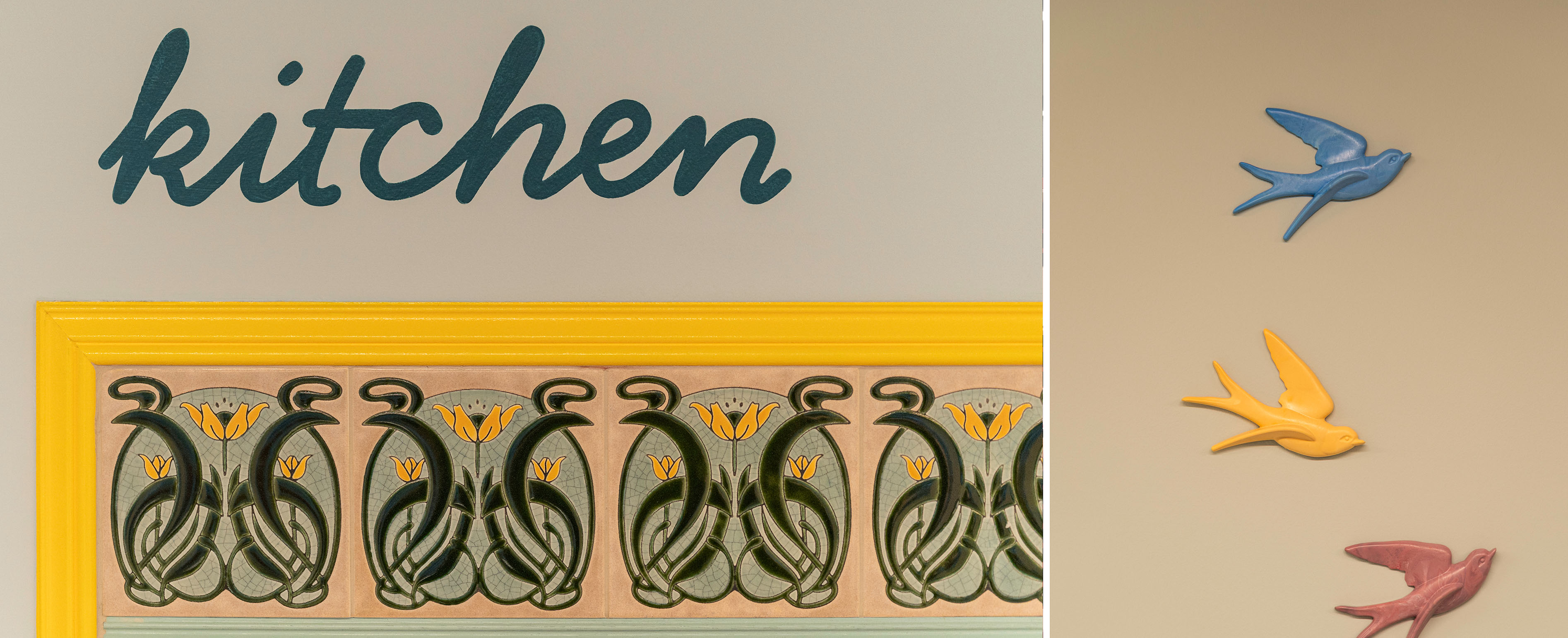
The design resists clinical cues in favour of a spatial language drawn from everyday life. Visitors are welcomed around a kitchen table rather than a reception desk, and rooms are named The Snug and The Library, reinforcing a sense of informality and belonging.
Spaces are arranged as a series of interconnected zones, offering varying degrees of openness and privacy. Visitors can choose how they engage, whether through quiet reflection, informal conversation or structured activity, without feeling overly steered or constrained.
Materially, the interior balances warmth and clarity. Colour, pattern and texture are used extensively to create an uplifting atmosphere, with elements developed in collaboration with local makers and embedded references that ensure a strong sense of place.
Furniture and Atmosphere
Throughout the space, sixteen3 furniture plays a supporting role, acting as a canvas for Anna and Finni’s creativity. A core principle of our work is to help shape environments that foster trust, openness and belonging, which felt particularly pertinent within the wider scope of this project.
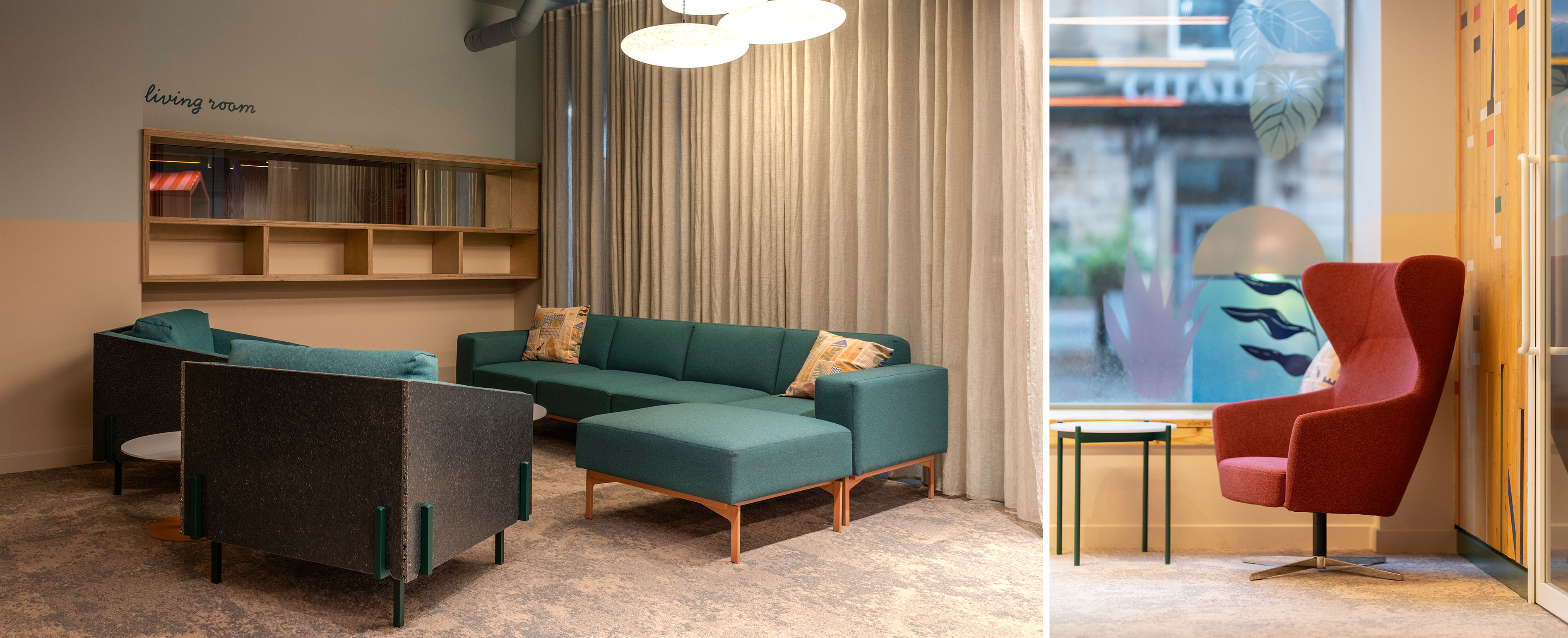
In the family room, the Sedir sofa provides a generous and informal place to come together, paired with the Breathe lounge chair. Both feature an intentionally reclined posture that encourages relaxed conversation. The wingback Romy chair creates a more cocooned position by the window, paired with a Milo side table for moments of quieter reflection, shielded but not disconnected.
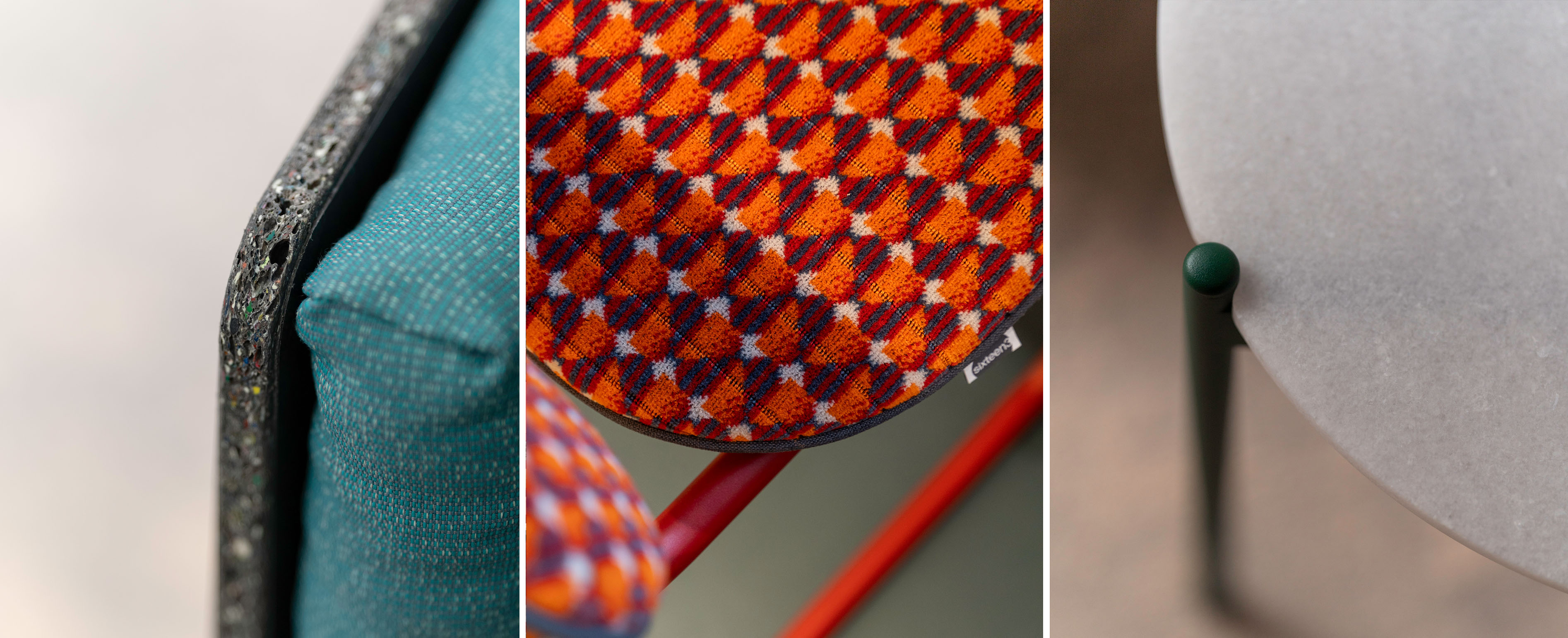
In the living room, Otto reinforces the domestic language, with a carefully balanced use of colour introduced through its Beige Red steel legs. Recycled finishes are used throughout, including Smile Plastics tops on the Milo coffee tables, while Reece armchairs combine recycled plastic panels externally with agricultural fibreboard internally.
Options tables form part of the social kitchen landscape, with colourful Pop stools providing additional seating. A particular highlight within the space is the Piper bar stool, upholstered in a custom fabric, ‘Clockwork Orange’, originally designed by Russell Stuart for the 1981 Glasgow Subway refurbishment, weaving another thread of place into the interior.
As the design team describe: “The furniture is calming and comfortable, which is essential in spaces where people are attending counselling and having sensitive conversations. The chairs and sofas genuinely support stress and anxiety reduction as they immediately feel comfortable.”
This emphasis on a holistic understanding of comfort is foundational, reinforcing the project’s aim to reduce anxiety from the moment someone enters the space, and to offer a range of settings that gently accommodate visitors in a personal and individual way.
Environmental responsibility was also integral to the specification, as noted by Finni and Anna, both as a practical and emotional consideration: “Sustainability was a key driver for us, so the option to use recycled fabrics and materials was a major reason for choosing sixteen3. We used only recycled fabrics throughout and selected Smile Plastics for their commitment to recycled plastic materials, which felt like a meaningful and responsible choice and helped reduce climate anxiety around the project.”
A Community-Centred Interior
At street level, large windows and an open frontage signal transparency and welcome, allowing the space to read as part of the everyday fabric of the city.
Inside, the absence of clinical cues allows the space to operate differently; somewhere people arrive, settle and engage at their own pace. Alongside one-to-one support, the hub hosts workshops, creative sessions and group activities, supporting both individual wellbeing and collective connection.
Reflecting on the outcome, the design team note the importance of this shift in atmosphere: “The impact the pieces have on the space supports our overall vision of creating a mental health space that is not clinical, and is instead homely and very welcoming.”
The success of this approach is already informing future projects, with many of the same furniture specified already for the next Nook in Aberdeen – extending a design language built around comfort, familiarity and care.
The Nook Glasgow can be found at Brunswick House, 51 Wilson Street, G1 1UZ
For more information on the Nook, SAMH services, or to get involved, visit https://www.samh.org.uk/
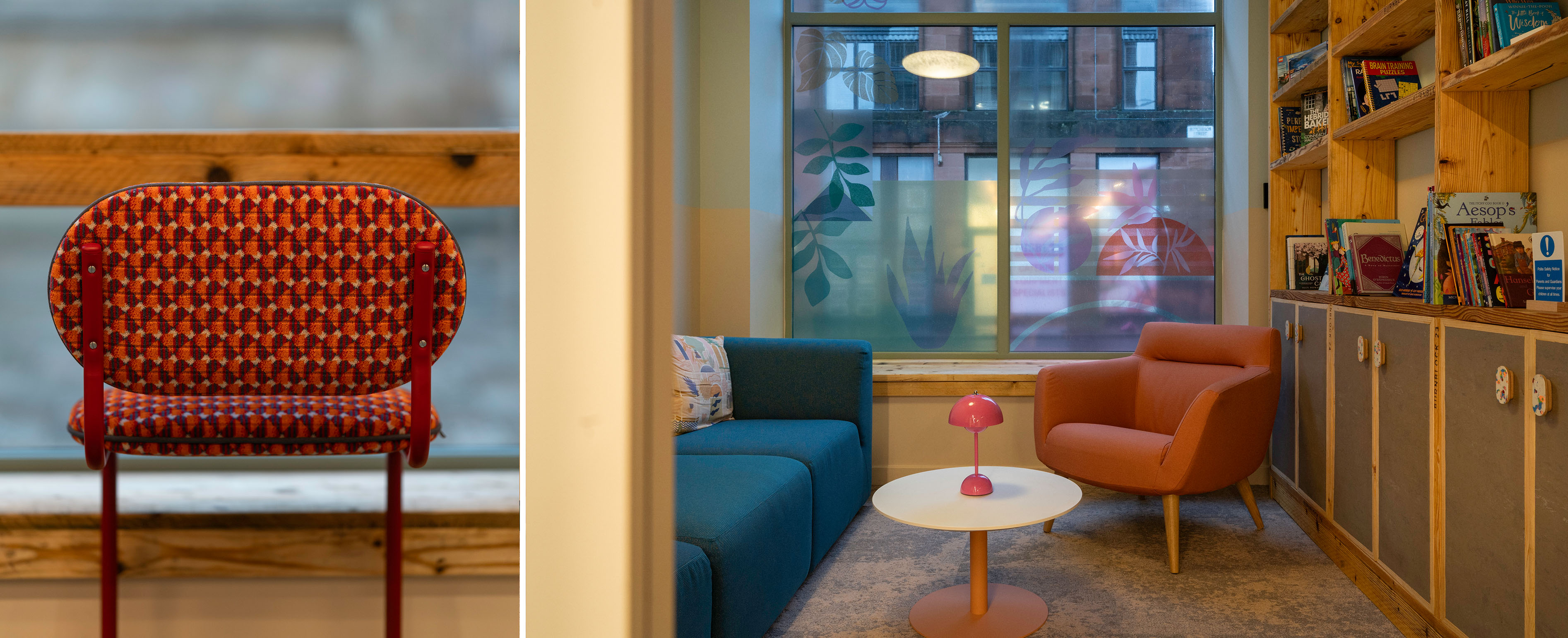
Featured Products: Piper Stools, Options Tables, Romy Chairs, Sedir Sofas, Breathe Chairs, Otto Sofas, Reece Armchairs, Milo Tables
All photography by Curse These Eyes Photography